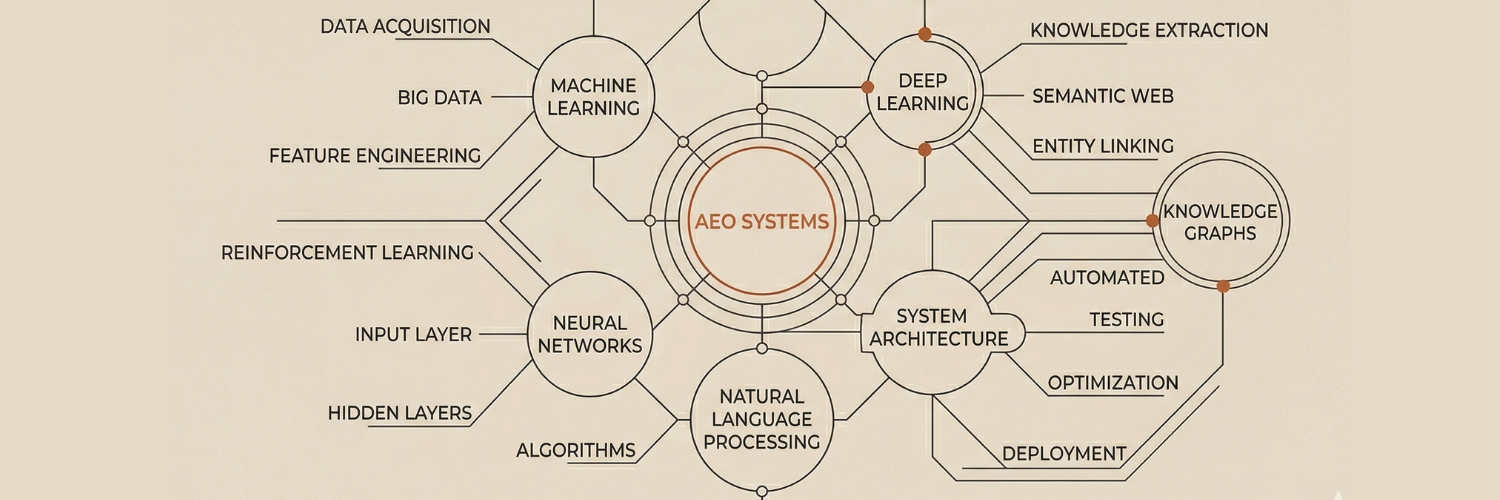
You already know AI Search Optimization. You just don't call it that yet.
The first part of our email course and the most important signals in the industry this week.
Stop panicking about AI search. You already have the skills to win this new era.
This week, AI search officially grew up. Bing wrote Generative Engine Optimization (GEO) into its rulebook, and AI assistants just crossed 56% of global search volume. The experimental phase is over.
What's in it for you:
- AI Search Email Course - Part 1: What AI Search is and why it's probably not as difficult as it sounds.
- Industry Signal: Bing's new native AEO dashboard, Google's forced AI title rewrites, and why personalization just broke standard rank tracking.
Let's dive in.
What is AI Search?
Every few years, someone announces that your job is about to change completely.
Social killed SEO. Mobile killed the web. TikTok killed everything. And now AI search is going to make all your optimization work irrelevant.
You have heard this before. And you are right to be skeptical. (I was too)
But here is the thing:
AEO (Answer Engine Optimization), sometimes GEO (Generative Engine Optimization) or as I like to call it AI Search Optimization (sounds much simpler) actually is different from the last 5 "everything changes" cycles. Just not in the way most people are framing it.
AI Search isn't a completely new skill set you need to learn from scratch. It is the skill set you already understand.
Let me show you what I mean.
In the late 90s, search engines had figured out relevance. They could match your query to web pages that contained those words. What they couldn't figure out was authority: which of those 50 relevant pages should they actually trust?
Google solved this with PageRank. Backlinks became votes of confidence.
More citations from trusted sites → higher authority → better ranking.
That was the foundation of SEO as we know it.
Now look at LLMs. ChatGPT, Perplexity, Gemini: they are extremely good at relevance. They understand what you are asking. But they have the exact same authority problem Google had in 1998: when 12 sources say different things, which one should the model trust?
Same problem → same type of solution.
The mechanisms that worked for SEO (citations, structure, authority signals) are the mechanisms that will work for AEO.
If you have done ASO or SEO, you already understand most of it.
Think about what you do when you optimize an app store listing. You research what users are actually searching for. You structure your metadata so the algorithm can understand it. You build social proof through ratings and reviews. You test, measure, iterate.
AEO works on the same principles:
- Research what people ask AI
- Structure your content so the model can extract answers
- Build authority so the model trusts you over competitors
- Measure, iterate.
The inputs are familiar. The output surface is new.
So what is actually different?
Three things.
First, LLMs don't return a ranked list. They synthesize a single answer from multiple sources. So you are not competing for position #1.
You are competing for citation probability: the chance that your content gets pulled into the answer.
Second, the "tail" is way longer. People talk to ChatGPT in full sentences, not 3-word queries or even one word like sometimes in the App Stores. "Best meditation app for busy parents who have never meditated" is a real query now. And LLMs decompose that into dozens of sub-questions before fetching results. This is called fan out. Your content needs to answer those sub-questions, not just the main keyword.
Here is an example:
The AI Way (The Fan Out): The user opens ChatGPT or Perplexity and types: "What is the best meditation app for busy parents who have never meditated?"
The AI doesn't just search for that one long sentence. It performs a fan out, breaking that prompt down into a checklist of sub-queries to evaluate your content against:
- Query 1: Does this app have sessions under 5–10 minutes? (Solving for "busy parents")
- Query 2: Is there a dedicated onboarding or "basics" course? (Solving for "never meditated")
- Query 3: Does it have offline listening or hands-free features? (Solving for parent lifestyle)
- Query 4: Do reviews specifically mention it helping with parenting stress?
And your job is to structure the content in a way that allows to answer these questions. We will dive deeper in our next email.
Third, freshness matters more than you think. Citations decay fast (we'll get into the exact numbers also in a later email). The content you published 6 months ago might already be invisible to AI search.
The bottom line
AEO builds on what you already understand. The core principles transfer directly. The new layer is understanding how LLMs select, extract, and cite sources, and then structuring your content to match that process.
*End of Part 1
Next up up in Email Course Part 2 how AI search engines actually break down a single question into dozens of sub-queries before they ever look at your content (and why this changes everything about how you structure a page). AND how to structure your content properly.*
This week's Signals: Platforms Are Writing the Rules
This was the week Answer Engine Optimization (AEO) stopped being a practitioner-led experiment and became a platform-governed discipline. With AI assistants now generating roughly 45 billion monthly sessions — equal to 56% of global search volume — platforms are formalizing the rules because the stakes are real.
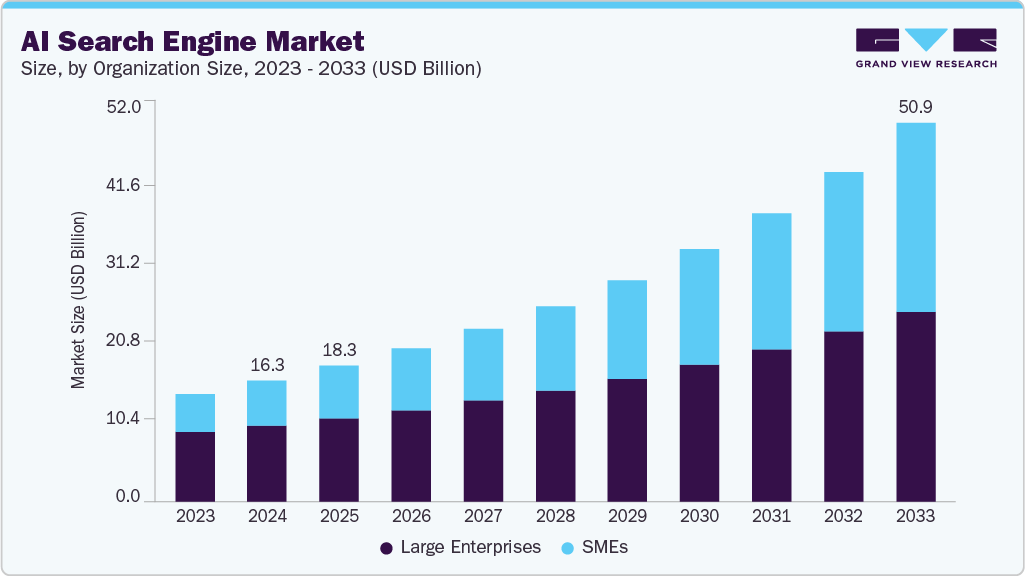
Here is what moved this week:
Bing Writes GEO Into the Rulebook: Bing officially added "Generative Engine Optimization" to its Webmaster Guidelines outlining exactly how metadata affects AI grounding and expanding its abuse policies to penalize AI citation manipulation ("Artificially Engineered Language").
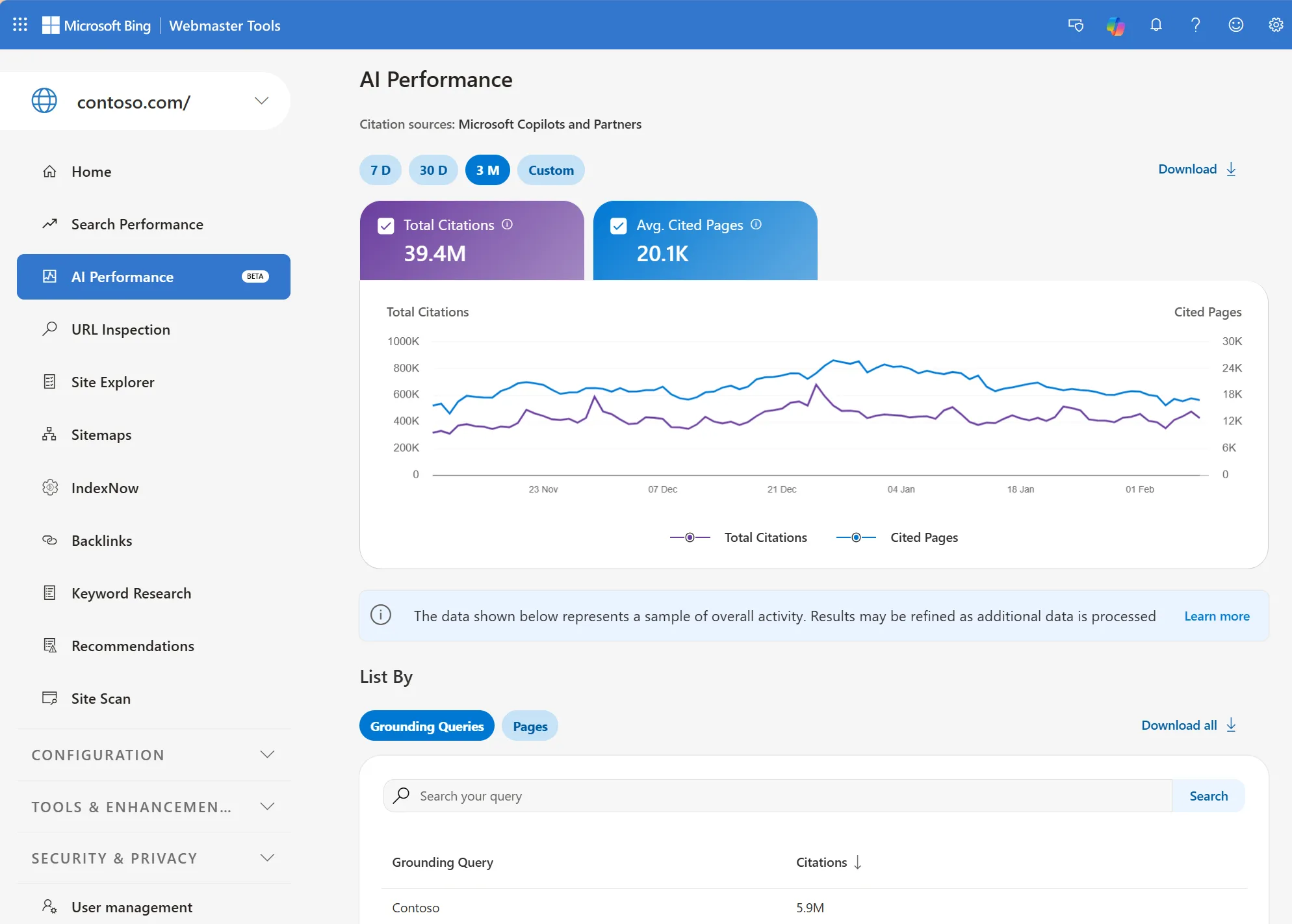
The First Native AEO Dashboard: Bing's new AI Performance dashboard in Webmaster Tools is now live. It exposes "grounding queries" — the exact backend phrases the AI uses when retrieving your content. This is the closest thing we have to keyword research for AI search.
Action: Connect your site and baseline your citation metrics to see how AI models actually query your content.
Google Is Rewriting Title Tags With AI: Google is actively testing AI-generated title tag rewrites in core Search based on full-page context, with no opt-out. Google is basically replacing your original headlines with shorter and reworded versions…
Action: Ensure your page is unambiguous about its primary entity. If your title tag was doing all the heavy lifting for a poorly structured page, the AI will likely rewrite it poorly.
Personalization Breaks AEO Benchmarking: Google expanded "Personal Intelligence" in AI Mode, connecting responses to a user's Gmail, Calendar, and Shopping history. Personal Intelligence in AI Mode and Gemini expands in the U.S.
Action: Because results are no longer universal, standard AEO rank-tracking is effectively broken. Shift your primary citation benchmarking to logged-out environments or non-personalized engines like Perplexity or Claude.
The Takeaway: Platforms are no longer ignoring AEO. Practitioners who have built the right infrastructure, entity clarity, structured data, authoritative sources now have native tools to measure their success. Those still treating AI search as a "nice to have" are already losing ground.
Further Reading
- 56% AI Search Volume: Industry study by Ethan Smith (Graphite.io), via Search Engine Land (Ethan Smith is anyways a guy you must follow if you are into AEO)
- Bing GEO Rulebook: Microsoft's official update to the Bing Webmaster Guidelines
- Bing AEO Dashboard: Official Bing Webmaster Blog announcement
- Google AI Title Rewrites: Confirmed test covering AI headline replacements, via Search Engine Land and 9to5Google